Tidal Bores in the UK: Where to See One and How to Time Your Visit
On the right tide, a British river can stop flowing and start travelling backwards: a single wave rolling upstream against the current, curling over the mud. A handful of times a year it is worth rearranging your week for; most months there is something modest to see if you know which stretch of bank to stand on. Here is where the UK's tidal bores appear, and how to work out when.
A bore needs a funnel. As the incoming tide squeezes into an estuary that narrows and shallows, the leading edge of water is forced upwards because it has nowhere else to go. Instead of rising gently, it arrives as a step — a wall of water that pushes upstream against the river's outflow.
The Severn Estuary has one of the biggest tidal ranges on the planet, which is why its bore is the famous one. A river that has been running low for a week or two helps as well: the less fresh water pushing down, the less the wave has to fight. Heavy rain upstream can flatten a bore almost completely, which is why a promising tide sometimes produces nothing much at all.
The Severn Bore runs from the estuary up past Gloucester, and on the largest spring tides it can carry surfers and kayakers several miles in a single ride. On ordinary spring tides it is a low, polite ripple; on the biggest equinoctial tides it becomes a breaking wave worth the journey.
It arrives twice a day on the tides that produce it — roughly twelve and a half hours apart — though the two are rarely equal. Bore timetables published locally give predicted times for key points along the river.
Newnham-on-Severn is a good first stop, with the wave forming out in the channel. Minsterworth is the classic viewing village, with a grassy bank and easy parking. Stonebench, near Elmore, gives a longer view of the bore's approach, and Over Bridge carries a crowd when a big one is forecast. Further upstream, the wave fades into a surge rather than a breaker.
The Trent's bore takes its name from Aegir, the Old Norse sea god, and it behaves like a quieter cousin of the Severn's. The Trent is tidal as far as Cromwell Lock, well above Newark, and the wave is most often reported around Gainsborough, where the riverside gives a clear, safe view of the channel.
Other established spots include Keadby and Burringham, with smaller, fussier waves recorded further upstream at Collingham and Besthorpe. The Aegir is less predictable than the Severn Bore: it appears on big spring tides, tends to be more visible when the river is low, and can be generous one month and absent the next.
Bore-watching is a forecasting hobby as much as a spectator sport. Work through these in order:
Arrive thirty to forty-five minutes early. That sounds excessive until you have watched a bore arrive ahead of schedule while you were still crossing a field.
Pick your river first, then find a tide that suits a day out rather than the other way round. A big spring tide at Minsterworth can be paired with breakfast in Gloucester; the Trent Aegir fits neatly around a walk at Gainsborough; Arnside works well as a half-day with the bay in front of you.
Take binoculars, a flask and waterproof boots. Photographs of bores are best taken from slightly upstream of the wave, looking back down the channel, with something in the frame to give it scale — a moored boat, a bridge, a line of posts. And if the bore fails to show, as it sometimes does, remember that you have spent an hour beside a tidal river with a decent view. There are worse ways to spend a morning.
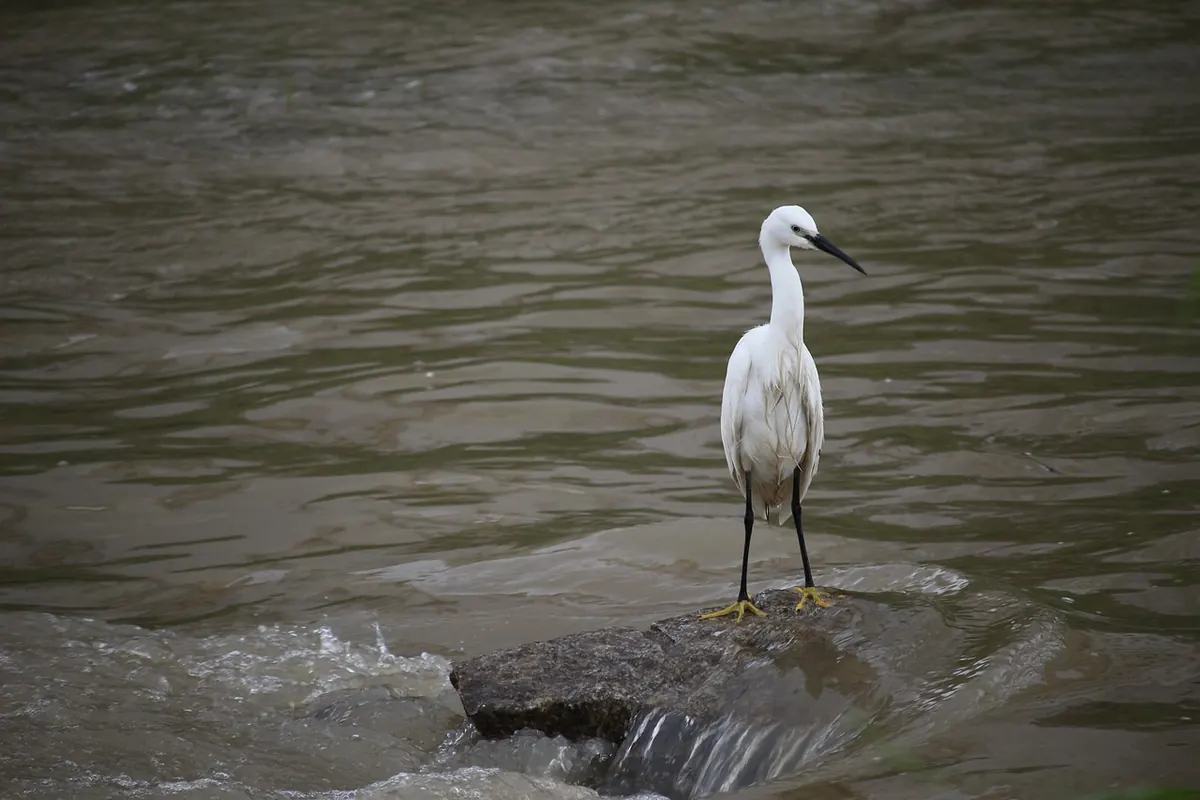
Photo: 마바사 / Pixabay
Previous Post
Dog-Friendly Beach Guide: Tide Times, Zones and Summer Bans to Check
Next Post
Coastal Erosion and Tides: How Beaches Change Through the Seasons